
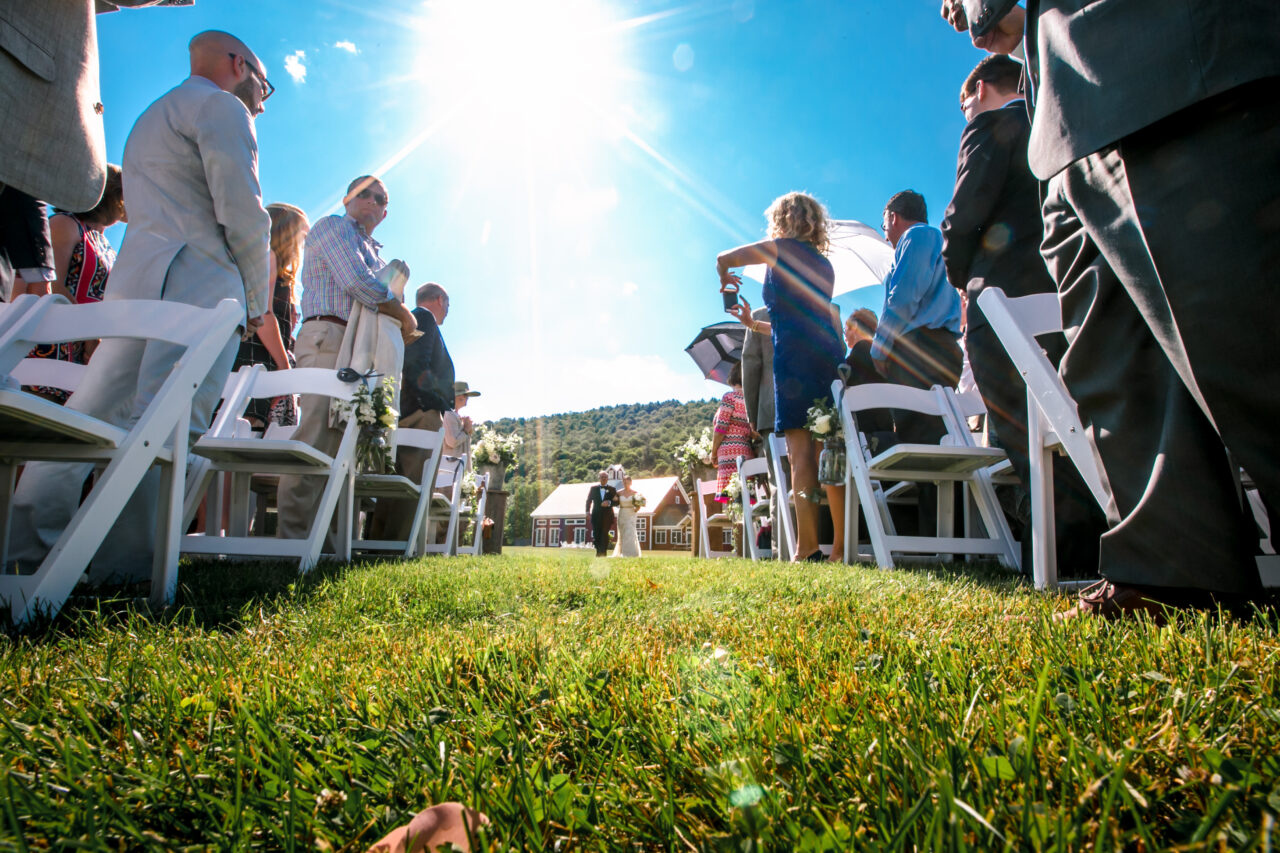
Wedding ceremony time that looks convenient on paper may not give you the light or portrait time you want. Bring your photographer into the timeline conversation early.
Work backward from the light
Midday sun can create strong shadows and squinting, while later-afternoon light is often softer. In Vermont, sunset changes substantially by season, so a summer timeline will not automatically work for a fall or winter date. Your photographer can help identify a realistic window for ceremony, family photos, wedding-party portraits, and couple portraits.
Think beyond the ceremony
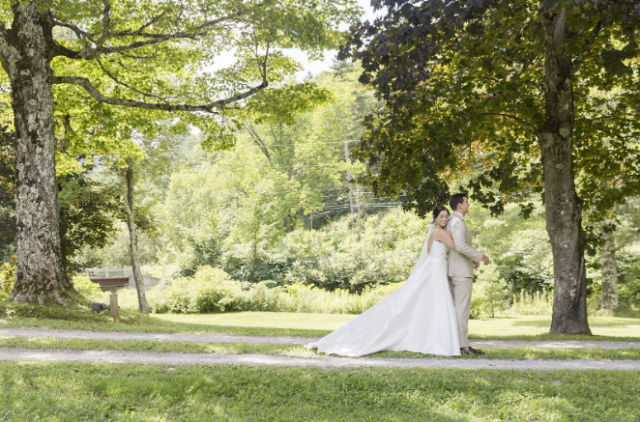
Photography continues through cocktails, dinner, and the first moments of the reception. Build in transition time, and leave a small buffer for a late family member, changing weather, or a spontaneous photo opportunity.
Use the setting throughout the day
Riverside Farm’s fields, gardens, mountain views, and estate surroundings offer different possibilities as the light changes. So wedding ceremony time can play a big role in a setting like Riverside Farm. A shared plan helps your photographer make use of them without pulling you away from the celebration for too long.
Begin with the photographs you value most
There is no universally perfect wedding ceremony time. The right choice depends on the season, your location, the kind of photographs you love, and how you want to spend time with your guests. Before a final timeline is set, tell your photographer what matters most. Do you picture a first look? Formal family portraits in daylight? A golden-hour walk? Do you want to attend most of cocktail hour, or are you comfortable stepping away for a few minutes? Honest answers make it possible to create a schedule that supports rather than competes with the experience.
Ask your photographer to explain how the light changes at your time of year. In Vermont, a summer evening has a very different daylight window from an autumn afternoon. Trees, fields, buildings, and a ceremony site’s orientation can also change how light falls. A photographer who understands the setting can suggest a practical sequence for portraits without promising a particular weather condition.
Build the day from fixed points outward
Start with sunset, dinner service, or another immovable event, then work backward. Add time for getting ready, travel, detail photos, a first look if you choose one, wedding-party portraits, family photos, the ceremony, and a transition into cocktails. The common mistake is to assign only the minutes required for each item. Add small cushions for gathering people, a dress adjustment, a passing shower, or the hugs that happen after a ceremony.
Create a concise family-photo list in advance and appoint a person who knows the important faces to help gather them. This small bit of preparation can save a surprising amount of time and lets everyone return to celebrating sooner.
Make space for real life and changing weather
A good photography timeline is flexible enough to move. Talk with your photographer and planner about a rain option, indoor portrait possibilities, and which images matter most if time becomes limited. Weather plans are not a concession. They are what make couples feel calm when the forecast changes.
If you want sunset portraits, decide in advance who will tell you when the light is right and how long you expect to be away making wedding ceremony time critical. A brief, intentional pause can be more enjoyable than an open-ended disappearance from the reception. Your guests will be comfortable knowing what to expect, and you will have a chance to breathe together.
Use the setting as the day evolves
Fields, gardens, mountain views, and historic details can offer different moods from morning to evening. Rather than trying to use every location, choose a few that feel true to you and fit naturally into the route of the day. Your photographer can help you avoid turning portraits into a long excursion. The point is to preserve the feeling of the place while keeping you connected to your celebration with a well chosen wedding ceremony time.
At Riverside Farm, the grounds and estate surroundings offer varied possibilities as the light changes. Bring your photographer into the conversation early, keep the timeline humane, and you will be more likely to remember the time in the photographs as fondly as the pictures themselves.
A question to ask before finalizing the timeline
Ask your photographer, “If we only protect one portrait window, when should it be?” The answer clarifies priorities quickly. It may lead you to adjust a wedding ceremony time by thirty minutes, choose a first look, or simplify a family-photo plan. Small changes made early are much easier than trying to create daylight after the schedule is printed.
Make this conversation part of an early planning meeting, alongside your venue contact and planner if you have one. A shared understanding of a well selected wedding ceremony time prevents the timeline from becoming a series of last-minute compromises.
Closing image: Riverside Farm website. Suggested alt text: Outdoor wedding ceremony lawn with Vermont mountains
Ready to picture your wedding day in this light?
Explore Riverside Farm’s fields, mountain views, historic spaces, and the natural flow they can bring to your ceremony and photographs.
Contact Riverside Farm to plan a visit and discuss your wedding date.